
<<< I’M RUNNING A GIVEAWAY OF HEATHER’S BOOK . . . SEE BELOW >>>
Comment below for a chance to win your choice of an ebook or a paperback—USA only.
In the novel Hope Even After, author Heather Greer has tackled the tough topic of addiction in the form of alcoholism. I applaud her for doing this. Though this topic in fiction might take us out of our comfort zone, it’s vital and timely for a Christian audience.
Christian community should be a safe place to be transparent and honest, accepted with empathy, and challenged with love. But often the opposite is true. Those who struggle—as well as their families—are judged and shunned.
In caring for addicted loved ones, people might not know the best way to help them. That can result in enabling and rescuing, making the situation worse. People in these situations need support and appropriate resources for the long road to recovery.
How do you best love somebody who is bent on making bad choices over and over? When do you say yes? When do you say no? What does grace look like? How much grace is too much? When should grace be offered and when do we let people suffer the consequence of their own bad choices?
Furthermore, how can be walk alongside the families of addicts?
Hope Even After is a good starting point for discussing these questions and scenarios.
Check out Heather’s interview with Liana George as they discuss addiction, boundaries, and enabling.
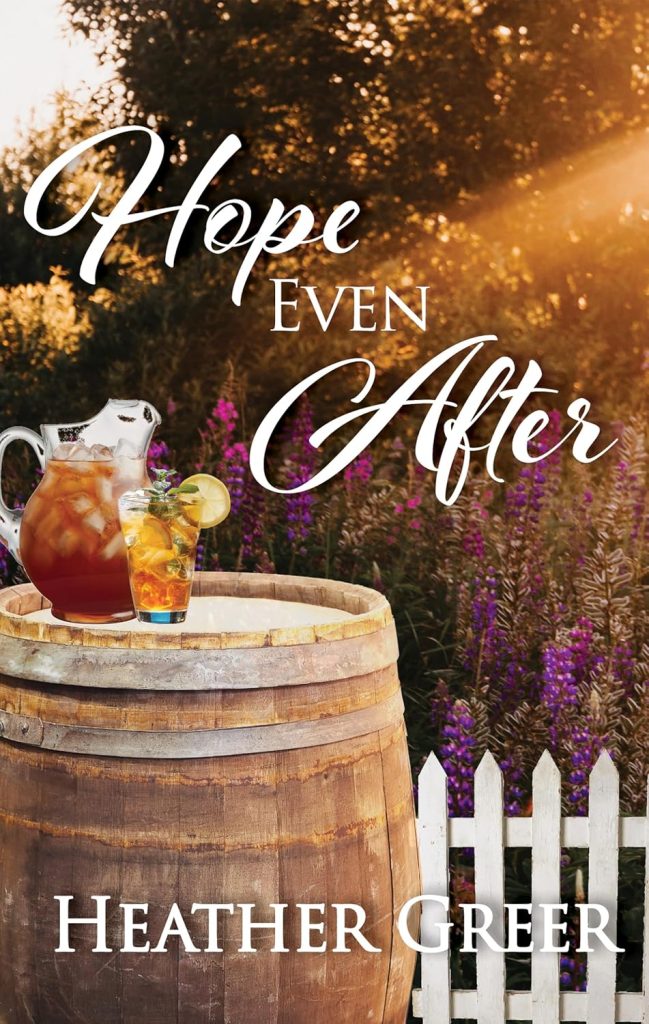
Blurb
Loving him was never the problem.
Living with the addiction was.
In a small Illinois town, Daisy Taylor has loved her best friend Luke Masters since high school. But when grief drove Luke away from faith and into alcohol, Daisy learned an impossible truth: loving someone does not mean you can save them. Hoping for more than friendship felt risky, especially when the man she loved stopped believing in God and in himself.
Luke once trusted faith. After devastating loss, he decided it was nothing more than a crutch, and the bottle became his refuge. But when he crosses a line he cannot undo, Luke is forced to confront his addiction and begin the slow, humbling road toward sobriety.
As Luke fights for recovery, Daisy walks a razor’s edge, loving someone in recovery without rescuing him, supporting him without losing herself, and guarding a heart she buried years ago. Old feelings resurface. Faith is tested. And the future she once mourned threatens to reappear—fragile and uncertain.
Hope Even After is a faith-filled story of second chances, hard-earned healing, and the quiet courage it takes to trust God when answers do not come easily. With emotional depth and a gentle thread of romance, this novel explores boundaries, grace, and what it means to hope wisely rather than desperately.
Perfect for readers who enjoy thoughtful, faith-centered novels like Still of Night, Where Grace Appears, Night Songs, and The Divine Proverb of Streusel.
If you believe hope can survive loss, love can grow with boundaries, and faith can rise even after disappointment, begin this redemptive story today.
*******************
My thoughts:
Daisy Taylor can’t easily walk away from a man she has loved for years. Even with all the ups and downs, with regular crashes that break her heart, she can’t stop caring.
Both Daisy and Luke are likable, relatable characters. Reading the story through both of their perspectives definitely delivers a bigger punch than just one perspective would.
Being inside Luke’s head helped to see the whole person and better understand his plight. Basically, he’s a good guy—until he drinks. He uses alcohol and one-night stands to numb his grief over personal losses. We come to understand why he is driven to such measures, and what the underlying issues are.
Enter the skeptic friend Bekah who has no use for Luke and his irresponsible antics. She constantly warns Daisy to stay away from him, not wanting to see her friend hurt.
This story should elicit good discussion about where and how grace should play into our lives when dealing with an addict. When are we our brother’s keeper and what does that look like? What is love with boundaries? When and how do we erect boundaries in the right places?
This novel is thought-provoking. Readers may agree or disagree with Daisy and Luke’s choices. Daisy has a lot of compassion, but does she overdo it as Bekah suggests?
Without giving too much away, I was glad to see that Daisy and Luke eventually found support in a good friend and in separate support groups (Al-Anon and Celebrate Recovery). This speaks to the importance of surrounding oneself with a community of people who will listen with acceptance, compassion, and wisdom. This is not a road to walk alone, but it might take time to realize that.
Faith is a vital part of Daisy’s life. She remains strong, loving Luke despite his falling away from God. Yet she has just as much to learn as he does. She finally realizes she can’t be responsible for Luke’s sobriety. She also doesn’t want to the be reason he stays sober. He needs something more—God. So does she.
“Our hope isn’t in people to make right choices.
It’s in God’s ability to work in the person even when they fail.” ~ Daisy
This is no simple journey, nothing neat and tidy about it. Daisy and Luke’s character arcs demonstrate how difficult it is to relinquish control and trust God with those things instead. Despite the challenging subject matter, this story is warm and sweet with humor woven in too.
At one point, some of the character change happened rather quickly, but overall, the novel has good pacing. If you like stories of faith that don’t shy from tough issues, give this one a try.
<<< I’M RUNNING A GIVEAWAY OF HEATHER’S BOOK . . . SEE BELOW >>>
Comment below for a chance to win your choice of an ebook or a paperback—USA only.
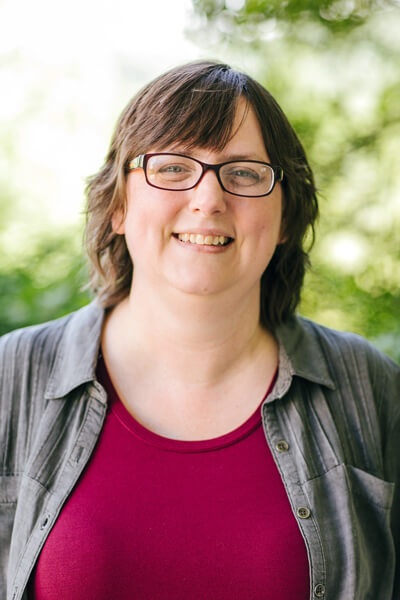
Join me for some Q & A with author Heather Greer.
Questions about Hope Even After
What was your inspiration for writing Hope Even After? What’s your personal connection to the story and/or setting?
Heather: My inspiration for writing Hope Even After came from personal experiences with relationships changed by addictions. Dealing with friends or family that struggle with addictions, ministering to those who are dealing with them through our pastoral and youth ministry, and my husband’s experiences as an addictions counselor throughout our marriage have all played a part in this story.
Even though the story takes place in my hometown, the characters are not a single person. They are more like a conglomeration of all the things we’ve experienced and the research that I’ve done rolled into one fictional story.
No doubt your experience enriches your story. How did you develop your hero and heroine? Did they hijack the story or did you have full rein?
Heather: Full control of my characters? That would be new! Daisy and Luke showed me through each scene who they are. I had ideas about them as I began writing, but as they interacted and made choices, their personalities, experiences, and wounds became clearer.
I keep whiteboards in my writing space. Everything I learn about the hero and heroine goes up on the whiteboard. Once they show me who they are, I think it’s important to honor that element of them throughout the whole story.
Sounds like a good way to keep track of them! If you were to write a spin-off book about one of your secondary characters, which one would you choose and why?
Heather: If I were to write a spin-off, it would have to focus on Bekah or Jill. Jill has been through some things. I know that from her mentorship of Daisy. Diving into her story might be interesting.
Katie and Nathan are great characters, but they’re actually the main characters in Relentless Love, the third book in my Faith, Hope, and Love series. With this story returning to the setting of that series, including Katie and Nathan in Daisy and Luke’s story was an easy choice.
Though Carbondale is a university town, it’s still fairly small. Those who grew up here get to know each other quite a bit. So, it made perfect sense for them to have history.
So fun to see recurring characters. And small town settings are the best! What was the biggest challenge of writing this story?
Heather: Showing the truth about addiction without making the one dealing with it a villain. There’s too much of that in church circles, and it doesn’t help anyone.
Many times it stems from not understanding something. People tend to give grace when they understand or relate to the flaw or a sin, but they tend to judge harshly when that thing wanders into an area they don’t relate to.
To borrow comic book language, since I’ve already used the term villain, I needed to weave understanding into Luke through his origin story. He didn’t wake up one day and decide he wanted to struggle with addiction. The reader needed to see the pain that tempted him down that path. And they needed to see that Luke is more than his addiction. He’s got good qualities too. They just don’t shine as easily when his addiction comes into play.
Honestly, I needed to write Luke so when readers looked at him as a whole, they could see themselves whether they’ve struggled with an addiction or not. So that they could see a guy who’s struggling with bad choices and their consequences. While his struggles might be different, everyone struggles with something they wish they could be done with once and for all.
You’ve definitely shown Luke as a whole and relatable person. What unusual or interesting thing did you do or discover while researching for this story?
Heather: This actually has nothing to do with addiction but Daisy’s profession. Through her tea business, I learned that herbal and fruit teas aren’t really teas at all.
Teas have to include leaves from the tea plant. These other drinks we call tea are actually herbal infusions or tisanes. I kind of like tisanes and think we should make its use commonplace.
That is news to me! So maybe I can’t call myself a tea drinker anymore. Hmm. What deeper questions does your novel explore?
Heather: Can love exist without boundaries?
What is the difference between helping and enabling someone?
If God doesn’t take the struggle, what good is faith to the person struggling with addiction?
If the situations don’t change, can we still have hope? If so, what are we hoping for?
Those are GREAT questions! I’d love to discuss those. What conversation do you hope book clubs will have after reading it?
Heather: I pray those reading Hope Even After come away with a greater understanding of and mercy and grace for those who are struggling with addiction or walking through life with someone who is. I pray this book opens the door, not only in book clubs but also in our churches, to open and honest conversations about what families are dealing with.
The statistics for addictions (drugs, alcohol, gambling, and pornography) in our churches are shockingly high. The person struggling with addiction doesn’t always look like the homeless guy on the street. There are those we sit beside in church every Sunday who look like successful business people, good family people, pillars of the community, who are struggling with an addiction people may not see.
There are spouses, children, and friends carrying a back-breaking, heavy hurt as they watch their loved ones struggle with addictions. Shamed and embarrassed, they’re trying to navigate unfamiliar and stormy seas of their relationships by themselves.
They shouldn’t have to. They should find help, hope, and understanding in their churches, not judgement, shame, and gossip about their situations. They should find strength to help lighten the load they carry.
And these things can only happen when we start having God-honoring, honest conversations about addictions.
Amen! I’ve seen this lack of understanding firsthand. Which of your books is the best introduction to you and your work?
Heather: That is a really tough question. I don’t write to genre. I write the stories God places on my heart to write, and every story includes people living their faith in everyday life. Some of those, like my novellas, are very light-hearted and fun. Others like Hope Even After dive into the deep end of life.
Maybe the best ones would be those that are a balance of both worlds. In that case, I’d say Love in the Squared Circle or Window of Opportunity (though that one is my only historical to date). Those also happen to be two reader favorites.
Questions about writing
Which books or authors have been most influential for you as a writer? What strikes you most about their work?
Heather: I grew up reading Lori Wick and Linda Chaikin, and they each have a special place in my heart. But the author most influential to my journey is Kristen Heitzmann. Her characters are so real. And their faith is so imperfectly lived, just like the rest of us.
But at the same time, there is some element of them so in tune with God that I can’t leave one of her stories without being inspired to grow more in my own faith.
I can see why they impacted you. Share a little about your novel writing process, and the length of time it takes to complete a book.
Heather: I don’t start a manuscript from one specific place. Sometimes, the character comes first, other times the faith element is the foundation. One I’m working on now started with the first line. Another built off the theme.
The time from beginning to end varies too. If I’m under contract, I have to complete the story in a certain amount of time. Whether I use that whole time or wait until close to the date and do a total writing sprint to the finish line is another matter.
I like to have a completed story within a year, but without a deadline looming over me, it’s easy to let other elements of my busy life interfere. God and I are currently working on that.
Deadlines definitely help keep us on track! Why do you write in your particular genre?
Heather: I’ve written romance and women’s fiction because I’ve always loved those stories. The genres I read most are the ones I’ve ended up writing. For a long time as an author, I felt like I had to stay in my chosen lane. My message and branding had to stay consistent throughout every story I wrote.
But romance or even women’s fiction are not all of who I am. I’m also a geek at heart. I love Doctor Who and The Lord of the Rings. And children’s books. I’m at the point in my life that if the story comes to me with a fantasy cover, that’s the story I want to tell. If it arrives with colorful children’s illustrations, then that’s what I’m going to write.
Yes, branching out like that comes with risks. And I may have to find alternate avenues for publication and marketing and all that goes with releasing a book into the wild.
That’s okay. Because one thing will remain the same throughout all the stories I write. Whether sweet romance, heartfelt women’s fiction, imaginative fantasy, or colorful children’s stories, the heroes and heroines in the stories will be people imperfectly living and growing their faith in the mess of everyday life.
I love that you write the stories of your heart, regardless of genre. Is there any writing advice you wish you’d known 10 or 15 years ago?
Heather: Be prepared to balance in ways you’ve never thought about. Writing, especially a series, means writing, editing, releasing, and marketing all at the same time. There is no “I’ve written and released the book, and now I’m done.” Time management is vital, and for some of us, it’s not an easy thing to learn. Start now.
Great advice! Very realistic too. How many unpublished and unfinished manuscripts do you have? Any plans to pursue publication for any of them?
Heather: I currently have three finished children’s picture books. One of those I’m actively working toward publishing this year or early next year.
I also have a hands-on nature devotional for 8- to 12-year-olds that is currently in edits and will hopefully be released this October or November. Also in middle grade fiction, I have a fantasy trilogy and I’m only a third of the way through the first book. But God has set it aside for now.
In adult fiction, I have two I’m currently working on. One is a contemporary romance retelling of The Wizard of Oz. The other is a romantasy. Neither story is past the first few chapters at this point. But I’m loving the journey on both of them.
I have two non-fiction books that are currently set aside, but I hope to return to in the future. We’ll wait and see if that’s God’s plan too.
That’s a lot of irons in the fire, Heather! I’m particularly intrigued by your Wizard of Oz retelling. 🙂
<<< I’M RUNNING A GIVEAWAY OF HEATHER’S BOOK . . . SEE BELOW >>>
Comment below for a chance to win your choice of an ebook or a paperback—USA only.
***************************
Back to Laura . . . On a similar note . . .
Speaking of tough topics, my recent release, House of Wind, addresses the issue of emotional abuse. Wendi is the wife of a narcissist pastor and nobody sees what she endures. For years, she has been trapped in a cycle of emotional abuse and finally takes steps to break free. Check out the trailer here.
Regarding another tough topic … The Broken Weathervane deals with mental illness. It’s a dual timeline fiction about family dynamics in a small town Midwest (Wisconsin) setting. Two co-workers seek the same information. One wants to publish it; the other has good reasons to keep it hidden. The timeline alternates between 2015 and the 1950s. Check out the reviews and book trailer here.
If you like historical fiction, you might enjoy A Hundred Magical Reasons. This story spotlights L. Frank Baum, author of The Wonderful Wizard of Oz, his friendship with a young girl, and his impact through the decades. Set in Holland, Michigan, this dual timeline novel alternates between 1980 and the early 1900s. Read more and watch the book trailer here.
If you like Southern fiction and small town/rural stories about family dynamics and secrets, you might enjoy my novel All That Is Hidden. Set near North Carolina’s Smoky Mountains in 1968, the story spotlights the bond of family and the connections of a tight-knit community. Northern exploitation threatens as a father’s hidden past catches up to him and tests family ties. Learn more and watch the trailer here.
All That Is Hidden is now an audiobook!
I invite you to join my monthly newsletter for writing updates, freebies, and giveaways. Sign up and I’ll send you a prequel and 7 Oz-inspired recipes: StandoutStoriesNewsletter.com
*************************
Heather Greer bio
Heather Greer is the author of Faith’s Journey, Grasping Hope, Relentless Love, and Cake That!. She has also had devotions published in Thriving Family magazine. Heather’s goal is always to write and speak truth to encourage God’s people to live their faith.
When she isn’t busy writing or speaking, Heather enjoys reading, baking, and spending time with her husband, children, and grandson. As a preacher’s kid and pastor’s wife, Heather has enjoyed years of serving in ministries that work with all age groups. Learn more on her website.
**********************
Join me next time for a visit with author Cathy Gohlke.
Meanwhile, have you read Hope Even After or any of Heather Greer’s novels or other stories about alcohol addiction?
Answer in the comments below for a chance to win your choice of an ebook or a paperback—USA only.
Ever reading,
Laura
Sign up for my monthly newsletter and receive the 7 free Oz-inspired recipes: StandoutStoriesNewsletter.com







This sounds like such a good book. I did an alcohol battle for years and often felt vilified by my church. It wasn’t until I joined another church and found Celebrate Recovery that I could recover and actually find joy in my recovery. thank you for introducing me to this
I’m sorry to hear about your battle with alcohol and especially how your church responded to you. That should not have been the case. I’m so glad you found another church along with Celebrate Recovery. What a blessing! Thank you for sharing, Lorraine.
I have not read Hope Even After.
Thanks for dropping by, Bridgette. I hope you get a chance to read it sometime!
Hope ever after….this was my life for way too many years with alcoholic husband and unfortunately it ran in my family….I would love to read this book .thank you for opportunity to try to win it…deep feelings
Thank you for sharing, Maureen. I’m sorry you had to endure that kind of situation. I hope you had the support you needed.
Sounds like an important book that needed to be written from the perspective of a believer! I doubt there are many Christians who don’t know someone struggling (or not struggling!) with addiction.
And while I agree church should be a safe place to admit sin and ask for help, we don’t always know how to do it!
Maybe some of those not responding well have been hurt themselves too many times by those with various addictions.
Maybe parents are worried about protecting their vulnerable children from some addictions whose consequences might spill over onto the innocent.
And maybe some of us have a misguided idea that we will be winking at sin if we don’t show disapproval of certain behaviors and actions.
So it is good to know there is hope for the addict, and that ultimately all of us sinners are tugging and pushing and encouraging each other to hope if the Lord while we help each other.
God willing Hope Even After reaches those struggling on all sides of addiction. And best wishes to Heather in her variegated writing life!
Thanks for your insights, Anita. Yes–there are a variety of reasons why believers don’t respond well to those going through tough times. A lot of times they just don’t know how. That’s the good thing about a book like Heather’s. Readers will probably have a better handle on how to deal with such situations.
I love the title, because it is so often hard to have hope when in the midst of a life connected with someone struggling with addiction. I love that Daisy, the main female character, still cares deeply for Luke, who is trapped by alcohol. And I especially love the line in Laura’s blog about Daisy: “Yet she has just as much to learn as he does.” That’s the part we sometimes forget when dealing with addicts of any kind. Hope Even After sounds like a great read for so many reasons, not the least of which is that it reminds us we are all sinners in need of a Savior.
You’re absolutely right. It would be easy to remain ignorant about these things as long as it doesn’t directly touch our lives. But we all can learn about how to better come alongside people in their struggles.