
<<< I’M RUNNING A GIVEAWAY OF CHERYL’S BOOKS . . . SEE BELOW >>>
Comment below for a chance to win a signed set of Sugar Birds and Leaning on Air—USA only.
Being a Midwest gal, I’ve always loved the North Woods of Michigan, Wisconsin, and Minnesota, all of which claim Paul Bunyan, by the way—along with the Dakotas, Maine, and northwest Washington state. Wherever logging camps existed back in the day.
My capers in the North Woods include canoeing in the Boundary Waters, camping and canoeing in northern Michigan, staying at cabins and lake cottages, climbing rocks at Devil’s Lake in Wisconsin, even seeing a bear or two. Fond memories, all of them. Except for the bears.
Though I’ve never visited the Pacific Northwest (other than Seattle), after reading Sugar Birds by Cheryl Grey Bostrom, I feel like I’ve been there too. The descriptions of nature were immersive, beckoning all the senses. Just as much as the characters who live there.
Sugar Birds is Cheryl’s debut novel. Among others, it won the ACFW Carol Award for Debut Fiction and was a Christy Award finalist for First Novel.
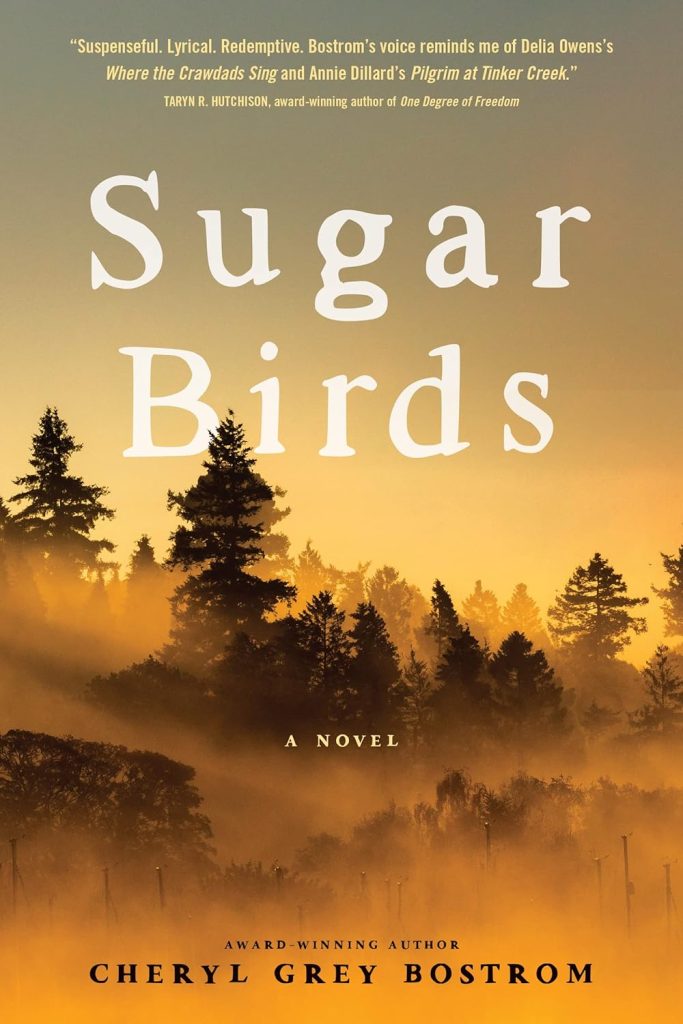
Blurb
A captivating coming-of-age novel about survival and redemption, set in the rural beauty of the Pacific Northwest.
NORTHWEST WASHINGTON STATE, 1985
For years, Harris Hayes has taught his daughter, Aggie, the ways of the northern woods, where she sketches nests of wild birds as an antidote to sadness. Then her depressed, unpredictable mother forbids her to climb the trees that give her sanctuary and comfort. Angry, ten-year-old Aggie accidentally lights a tragic fire and flees downriver. She lands her boat near untamed forest, then hides among trees and creatures she believes are her only friends―determined to remain undiscovered.
A search party gathers hours after Celia arrives at her grandmother’s nearby farm. Hurting from her parents’ breakup, she also plans to run. But when she joins the hunt for Aggie, she meets two irresistible young men who compel her to stay. One is autistic; the other, dangerous.
Ideal for fans of Under the Magnolias by T.I. Lowe, Where the Crawdads Sing by Delia Owens, and The Great Alone by Kristin Hannah, Sugar Birds is a layered, riveting contemporary story set in the breathtaking natural world―where characters encounter the mending power of forgiveness, for themselves and for those who have failed them.
******************
My thoughts
In 1985 in the Pacific Northwest, there resides a ten-year-old runaway and a sixteen-year-old almost-runaway. The younger one, Aggie Hayes, hides out in the woods for fear of consequences due to accidentally burning down her house and harming her parents whom she assumes dead. Her tree-climbing ability enables her to hide safely for weeks to avoid the hand of justice she is sure awaits her.
Teenager Celia Burke is staying with her grandmother under duress. Needing to work remotely, Celia’s father drops her off at her grandma’s and leaves–instead of heading to their cabin together for a promised vacation. Celia is furious.
This isn’t any ordinary grandmother. She is known as Mender, healer of wounded birds. She’s also wise in her dealings with sassy, stubborn, and self-centered Celia.
This unique cast of characters includes Aggie’s older brother Burnaby, intelligent and on-the-spectrum, a lover of birds and collector of their bones. Having been raised by their naturalist father and herbalist mother, Burnaby and Aggie’s love of nature and survival skills come naturally.
I love the juxtaposition of Aggie and Celia in this beautiful coming-of-age story. The tale is deftly told in third person through ten-year-old Aggie’s eyes and in first person through Celia’s perspective. Their voices and personalities are strong, distinct, and captivating. They also each have different information that the other needs to know. Both girls are intelligent, resourceful, and resilient. Both grow and learn lessons.
With its luscious descriptions of nature—whether flora, fauna, or bird bones—this novel definitely leans literary, a treasure trove of vivid imagery in every chapter. The Pacific Northwest setting is a character in its own right. The hand of the Creator is over all of it, opening eyes to the redemptive power behind it.
Join me for some Q & A with author Cheryl Grey Bostrum.
<<< I’M RUNNING A GIVEAWAY OF CHERYL’S BOOKS . . . SEE BELOW >>>
Comment below for a chance to win a signed set of Sugar Birds and Leaning on Air—USA only.
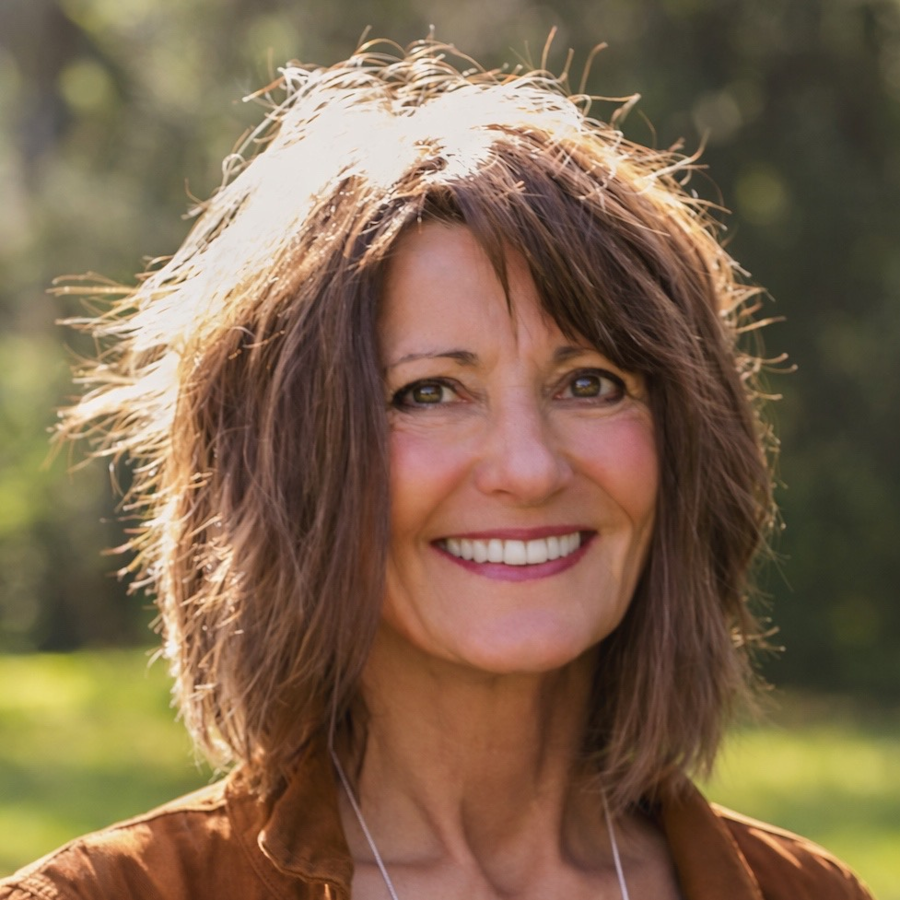
Questions about Sugar Birds
What was your inspiration for writing Sugar Birds? What’s your personal connection to the story and/or setting?
CHERYL: After a lifetime of writing in other genres, my long-suppressed yearning to write fiction finally overcame my fear of tackling it, and I began dabbling, playing with story form. My first grandchild was a baby when I decided to write a book for her. Sugar Birds grew from a simple sketch I’d written about a tree-climbing girl who lights a fire that escapes its bounds.
To write the book, I tapped my own childhood experiences in Pacific Northwest forests, where my sister and I climbed Douglas firs to precarious heights. I learned the habits of native flora and fauna mostly from my grandparents, and developed a keen love of birds from my grandmother. Just as young Aggie does in Sugar Birds, I found comfort and escape from a complicated childhood in the natural world, and considered nature my friend. Planting Celia and Aggie in the heart of a landscape I love and know so well was only . . . natural.
It’s fascinating to hear your connection to the protagonists with your love of nature and your own tree-climbing experiences. How did you develop your heroines? Did they hijack the story or did you have full rein?
CHERYL: When I began the narrative, I had only a superficial understanding of my two protagonists—Aggie and Celia. True, I knew their backstories, had a feel for their personalities and motivations, and understood where I wanted them to land at the story’s end, but that was about it.
Essentially, I was like a casting director who had read their resumes, had heard them read lines, and had finally chosen them for roles to play. Only when I planted them in my setting and exposed them to my inciting incident did I begin deeply interacting with them, listening to them, and adjusting my responses to what they wanted to say and do.
Aggie found her footing right away, and our working relationship became almost symbiotic. We trusted each other, and while frightened and confused, she was an endearing, cooperative character.
Celia, however, would have detonated the story if she could have. She already didn’t trust her dad, and when I tried to represent her with a third person POV, she told me she didn’t feel heard . . . and she clammed up.
But when I changed her chapters to first person? Oh my. The girl emerged . . . and took over. I loved her heart, her bluster, her misinterpreted yearnings—every inch of her. From that point on, both she and Aggie had free rein (within their arc boundaries, of course), and I was the scribe.
The casting director is a great analogy to writing a novel. I’m glad you figured out how to get Celia to corporate—by giving her more of a voice! If you were to write a spin-off book about one of your secondary characters, which one would you choose and why?
CHERYL: I’m so glad you asked! I already have: Leaning on Air!Burnaby Hayes created quite a splash in Sugar Birds as Aggie’s older, neurodivergent brother. I fell in love with him—as did my readers—and I wasn’t ready to let him go. Some have described this standalone sequel as a melding of A Beautiful Mind, The Notebook, and The Horse Whisperer.
I like that description.
Since Leaning on Air begins twelve years after Sugar Birds concludes, I guess it’s more of a companion novel than a sequel. Even so, readers are delighted to spend immersive hours with Celia and Burnaby as adults. Aggie and grandmother Mender appear in a few chapters, too.
Here’s the quick gist:
After a surprise reunion, hawk-researcher Celia and neurodivergent equine surgeon Burnaby plunge into a rare romance, then a marriage that carries them for years. Then tragedy fractures their unusual love story. Reeling, Celia hides out at a remote farm in Washington’s Palouse, determined to start over—alone—until cryptic horse sketches, sabotage, and a silent boy compel her to examine her past and reconsider her future. Cover copy describes it as “a soaring tale of wonder, loss, redemption, and restoration.”
Great that you got to spend more time with Celia and Burnaby. What was the hardest scene to write in Sugar Birds? Why?
CHERYL: There’s a scene later in the story that about tore my heart out, but telling it would spoil an important surprise. The second hardest had to be between antagonist Cabot, Burnaby, and Burnaby’s dog Pi. Feelings ran high in that intense scene, and I had to pray my way through it.
The hardest scenes probably do carry the most emotional weight—which tend to be spoilers. Was there an exceptionally interesting tidbit you knew you had to include?
CHERYL: There sure was! When a friend’s daughter was a bit younger than the story’s Aggie, she discovered a coyote den in their woods. Overjoyed to find several lively pups inside and unattended, she retrieved a laundry basket, climbed into the underground nest and hauled the whole litter to the house, where her gobsmacked mom intercepted them.
I still had Aggie sleeping in trees at that point, but knowing an early grade school girl could climb inside a coyote den gave me a fabulous place for Aggie to hide.
Wow, I can’t imagine delving into a coyote den! If a reader could underline only one passage, which one would you choose—and why?
CHERYL: Hands down, I’d choose this passage, from the scene where Gram Mender has just fended off Cabot as he tried to push his way into the house to reach Celia. Here Mender recalls her husband’s definition of a sugar bird:
“‘He scares me, Gram.’
‘Me, too.’ She slid a raspberry cobbler into the oven. Set the timer. ‘I’m afraid he’s a sugar bird, Celia.’
‘What do you mean?’
‘A term your granddaddy used for someone desperate, scratching and pecking and clawing for a sweet seed that will soothe that ache in his heart.’ She lowered a mixing bowl into the sudsy dishwater. Dried her hands. ‘Seems like he thinks you’re his.’
‘I’m no seed.’
‘Glad you realize it.’ Her finger traced my hairline. ‘I suspect that man will always be hungry.’”
Why this quote? Relevant to us all, I think. Before we know Christ, aren’t we all sugar birds?
One of my favorite parts of reading is learning how the title connects to the story theme. Love it! How does this book connect to your previous work—or signal a new direction for you?
CHERYL: Sugar Birds launched me in an entirely new direction. Before I dipped my toe into fiction, I’d written poetry and short- and long-form non-fiction for decades—columns, essays, devotional pieces, and two books: The View from Goose Ridge: Watching Nature, Seeing Life and Children At Promise: Nine Principles to Help Kids Thrive in an At-Risk World (with Dr. Tim Stuart). Today, I make crafting novels my priority.
Good for your readers that you decided to try fiction! If you could live in one of the story worlds you’ve created, which one would you choose, and why?
CHERYL: While I have lived in each of my books’ settings, if I were to return to one of them, it would be to the Palouse in SE Washington State, where my husband and I spent our first three years as newlyweds. Those were full, busy years, where I taught grades 10-12 in Colfax and where we both attended grad school at nearby WSU.
We remember our season there with great affection for the land, the community, our country church, and the lifelong friends we made, many of whom were my students. It was the sweetest of beginnings for us, and I drew much about Celia and Burnaby’s early marriage, before their heartbreak, from ours.
Questions About Writing
From where do your story ideas usually originate—character, plot, setting, theme, or a combination? Share 1 or 2 examples.
CHERYL: Always, always, I begin with setting. Since I’ll be mentally inhabiting that location for the next year or so, I choose somewhere in the greater Pacific Northwest where I’d like to spend my time, and where the creation can speak into the lives of characters who will wrestle with not only physical conflicts, but those of heart, mind, and spirit.
I usually decide my key characters next, and as I get to know them and what they long for and need, the plot and themes emerge organically.
In Leaning on Air, as soon as I decided on the Palouse, I instantly chose Celia and Burnaby to occupy it. Given their careers and compatible interests in science and animals, setting their life near the university towns of Pullman and Moscow was a seamless choice.
For my newest novel What the River Keeps, I chose the Elwha Valley for my setting—during the period two century-old dams were about to fall. Scientists gathered for this historic undertaking, and soon I added my reclusive biologist Hildy to their mix.
Thematically, breaking both the river’s physical strongholds and Hildy’s dark emotional and spiritual ones dovetailed beautifully, as did the river’s rewilding and Hildy’s healing and new-found freedom.
The plot continually surprised me as it responded to the characters. Events blindsided readers, too—as that breaking strongholds theme and one of deep forgiveness permeated the story.
Sounds like those settings truly speak to you. Share a little about your novel writing process, and the length of time it takes to complete a book.
CHERYL: Since I rewrote Sugar Birds many times as I learned fiction fundamentals, I spent a few years on that story. I was under contract with Tyndale for my next two books, with firm deadlines for my manuscripts. I had one year to write Leaning on Air, and What the River Keeps was due exactly a year after that.
I like deadlines, and I work happily with them. Since I plan on submitting a manuscript of 85,000 to 90,000 words, I divide 90,000 by the number of writing days I have to complete the story, then enter those daily word counts on my calendar, typically 4 or 5 days a week.
Family, travel, and daily life often intervene, so I keep white-out tape handy and revise those counts as needed. (I give myself a buffer and plan to finish a couple of weeks before my due date, just to be safe.)
First, on writing days, I ask God to inspire and guide the work of my hands and mind and heart as I settle in at my desk. Then I lightly edit the previous day’s work and dive into new content. Sometimes I can complete my word count in a couple of hours; others, I may work all day. Whether I feel like writing or not, I finish the count.
I like the pace of a book per year. Working twenty days a month on a 90K novel, if I write 565 words a day, I can finish a first draft in just under 8 months. Research, plotting, revisions, and reading all of it aloud handily consume the other four. I was a poet before I was a novelist, so I weigh every word and edit for tight writing. I don’t write quickly.
You seem like a very diligent, disciplined writer. Please share something about a current project or the direction you want to go as an author.
CHERYL: My first three novels are contemporary fiction. This next one will be either a dual timeline or straight historical piece. Currently, I’m crazy about the historical thread, but not as interested in the later one, so we’ll see!
Before the plot drives characters south to Washington’s San Juan Islands, the story opens on an island fox farm near Wrangell, Alaska—where my pioneer great-grandmother lived as a young wife and mother, and where I boated with my grandparents.
Like my others, it’s a layered nature novel and book club fodder. I’m pretty excited about this one.
You have so many great experiences to draw upon. If you could tell your younger writing self anything, what would it be?
CHERYL: Oh, so many things come to mind, but this would fall around the top of the list:
Read everything you write, Cheryl, ALOUD. Multiple times. You’ll hear needed edits your eyes won’t find.
Great advice! It’s astounding what you notice when you read aloud. What best prepared you for being a novelist?
CHERYL: Hm. I guess I’d say that reaching “a certain age” certainly helped, along with the deeper perspective, patience, and faith grown as my years advanced. A strong working knowledge of grammar and relentless tenacity have been a boost, too. Oh! And a Swiss cheese memory. Imagination works well with spotty recollections.
<<< I’M RUNNING A GIVEAWAY OF CHERYL’S BOOKS . . . SEE BELOW >>>
Comment below for a chance to win a signed set of Sugar Birds and Leaning on Air—USA only.
***************************
Back to Laura . . . On a similar note . . .
If you like dual timeline fiction about family dynamics in a small town Midwest setting, try The Broken Weathervane (launched September 2). Two co-workers seek the same information. One wants to publish it; the other has good reasons to keep it hidden. The timeline alternates between 2015 and the 1950s. Check out the reviews and book trailer here.
If you like historical fiction, you might enjoy A Hundred Magical Reasons (launched January 2025). This story spotlights L. Frank Baum, author of The Wonderful Wizard of Oz, his friendship with a young girl, and his impact through the decades. Set in Holland, Michigan, this dual timeline novel alternates between 1980 and the early 1900s. Read more and watch the book trailer here.
If you like coming-of-age stories like Celia and Aggie’s in Sugar Birds, you might enjoy my novel All That Is Hidden. Set near North Carolina’s Smoky Mountains in 1968, this story spotlights secrets in a small town, the bond of family, and the connections of a tight-knit community. Northern exploitation threatens as a father’s hidden past catches up to him and tests family ties. Learn more and watch the trailer here.
All That Is Hidden is now an audiobook!
I invite you to join my monthly newsletter for writing updates, freebies, and giveaways. Sign up and I’ll send you a prequel and 7 Oz-inspired recipes: StandoutStoriesNewsletter.com
*************************
Cheryl Grey Bostrom bio:
A keen student of the natural world and the workings of the human heart, Pacific Northwest author Cheryl Grey Bostrom captures the mystery and wonder of both in her lyrical, surprising fiction.
Her crossover novels Sugar Birds and Leaning on Air have won critical acclaim and more than two dozen fiction awards. What the River Keeps, winner of Christianity Today’s 2025 Fiction Award of Merit, was awarded a prized Kirkus Star and named to Kirkus Reviews’ Best Indies Book of June 2025.
Widely published, her short-form work currently includes her column in the American Scientific Affiliation’s God and Nature Magazine and her Substack: Birds in the Hand.
She has also written two non-fiction books. An avid birder and nature photographer, Cheryl lives in rural Washington State with her husband and a pack of half-trained Gordon setters. Learn more at CherylBostrom.com
**********************
Join me next time for a visit with author Terri Wangard.
Meanwhile, have you read Sugar Birds or any of Cheryl Grey Bostrom’s novels or other Pacific Northwest fiction? How about fiction that has a lot of nature in it?
Answer in the comments below for a chance to win a signed set of Sugar Birds and Leaning on Air—USA only.
Ever reading,
Laura
Sign up for my monthly newsletter and receive a prequel and 7 free Oz-inspired recipes: StandoutStoriesNewsletter.com







I haven’t read that before.
I hope you get a chance to!
Isn’t it amazing how locations become characters, and not just a backdrop for the action? That’s another gift books give us—we live with the people in the story but we live in the location—woods or rivers or oceans or small towns or bloated cities.
Cheryl’s titles are great, and so is her advice to read the written words out loud. Taking that advice would have saved a lot of writers from unnecessary oopses.
I agree–that is great advice. And yes, settings make such a difference. Some stories wouldn’t happen without the particular setting suited for it.
Thanks for reading and entering, Anita. I hope my stories (and their settings!) have the opportunity to capture you.
Taking your love of nature and setting your characters in the midst sounds wonderful! The storyline of young Aggie and the accidental fire sounds compelling. Another great book to put on my want to read list!
Glad you put it on your TBR pile, Mary!
Here’s hoping Aggie lands in your heart and doesn’t let go, Mary! Happy reading!